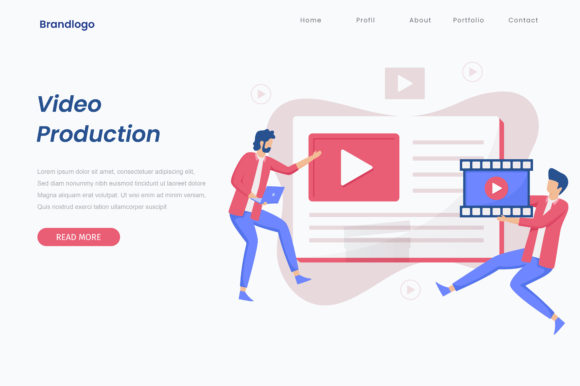
Video Production Illustration: Elevate Your Visual Content
In the fast-paced world of digital marketing and content creation, static text often isn't enough to grab attention. We are living in a visual era where the demand for high-quality video content is insatiable. However, creating actual video footage requires equipment, lighting, actors, and editing software—a resource-heavy endeavor that not every business can afford. This is where the concept of Video Production Illustration steps in to bridge the gap. It offers a stylized, approachable, and often more cost-effective way to represent complex multimedia processes. Whether you are a designer crafting a landing page or an entrepreneur explaining a service, understanding how to leverage these illustrations is key to modern communication.
The Power of Stylized Visuals in Modern Design
So, what exactly defines a Video Production Illustration? Unlike raw photography, which captures reality, illustration captures the idea of reality. It takes the often chaotic environment of a video shoot—cameras, lighting rigs, editing timelines, and creative brainstorming—and distills it into clean, understandable graphics. These illustrations usually feature a specific visual personality: bold lines, vibrant color palettes, and a sense of motion that implies creativity and progress. They are designed to be instantly recognizable, removing the clutter of a real-world photo to focus on the core message: we create video content.
The appeal of these assets lies in their versatility. A high-quality illustration set, typically provided in formats like EPS and JPEG files, allows for infinite scalability. You can use them as a hero image on a website without worrying about pixelation on high-resolution screens, or you can scale them down for a mobile app icon. This flexibility is vital for maintaining a professional brand identity across different mediums. When a potential client visits your website, they need to understand what you do within seconds. A well-placed illustration showing a character editing footage on a laptop communicates your service offering faster than a paragraph of text ever could.
Practical Applications: From Landing Pages to Social Media
For marketers, bloggers, and small business owners, the utility of video production graphics cannot be overstated. The most common application is, of course, the landing page. If you are selling video editing services, running a stock footage library, or offering online courses about filmmaking, your landing page needs to establish authority immediately. Using a cohesive set of illustrations helps build trust. It shows that you have invested in your brand's visual language, which subconsciously signals professionalism to the visitor.
Beyond the web, these illustrations are powerful tools for social media graphics and print design. Consider a content creator on Instagram or LinkedIn. Instead of using generic stock photos of cameras, using a stylized illustration can make a post stand out in a crowded feed. It creates a distinct aesthetic that followers can recognize instantly. Similarly, for those involved in editorial design or packaging design for tech products, these assets provide a modern, clean look. You can use them in posters, banners, and even educational materials to explain the video production process in a way that feels accessible rather than intimidating.
Furthermore, the personality of the illustration should match the personality of your brand. If your brand is fun and quirky, look for illustrations with rounded shapes and bright, playful colors. If your brand is corporate and serious, opt for flat design styles with muted tones and sharp geometry. The goal is not just to decorate your page, but to reinforce your brand identity through consistent visual storytelling.
Integrating Illustrations with Typography and Layout
A great illustration is only half the battle; it needs to work in harmony with your typography. When incorporating Video Production Illustration into your designs, pay close attention to how text interacts with the graphics. This is where understanding font pairing becomes essential. If your illustration is busy and detailed, you need a clean, legible sans serif font for your body text to ensure readability. Conversely, if your illustration is minimalist, you might pair it with a premium font that has more character, perhaps a script font or a handwritten font for headers, to add a human touch.
The illustration can also help establish visual hierarchy. By placing a character looking towards your "Sign Up" button or headline, you can subtly guide the user's eye exactly where you want it. This is a classic trick in web design and UI/UX, and it works wonders for conversion rates. It transforms a static layout into a guided experience, increasing audience engagement and reducing bounce rates.
Choosing the Right Assets for Your Project
When sourcing these design assets, quality matters. As a designer or publisher, you should look for files that offer versatility. A package that includes both EPS (for vector editing in Adobe Illustrator) and JPEG (for quick implementation) is ideal. This ensures you can customize the colors to match your specific brand palette or resize elements without losing quality.
Evaluate the file contents carefully. Does the set include various scenes? Do you have options for different devices (laptops, tablets, phones)? Is there a mix of "behind the scenes" shots and "finished product" shots? Having a variety allows you to tell a complete story across your mobile apps, posters, and banners. Remember, the goal of using Video Production Illustration is to create a cohesive ecosystem for your visual content. By selecting assets that align with your brand’s voice and pairing them with strong typography, you create a professional, engaging, and highly effective digital presence.